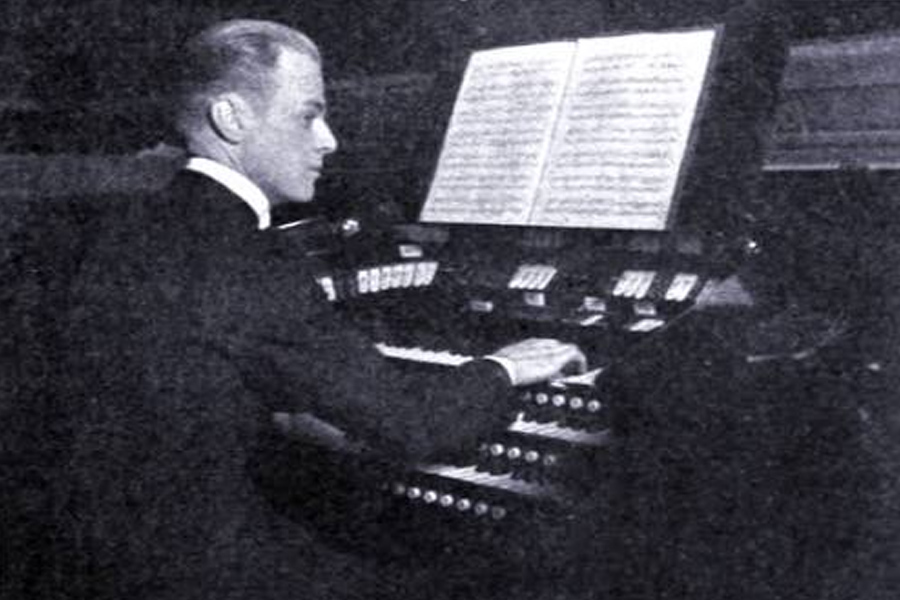
Eddie Sellen was one of a generation of musicians that kept theatres alive with sound before talking films. He was a theatrical organist, lyricist, arranger, composer, bandleader, and accompanist from Canada and America. Musicians used to work multiple gigs in one nite, from silent film scores to dance arrangements to backing vaudeville comedians and singers.
I consider Edwin Sellen as a working artist whose value comes from versatility, not celebrity. He contributed to the vibrant music of early 20th-century entertainment. His organ playing gave films emotional colour, while his arranging and bandleading enabled performers put on a show.
Early Life in Canada and the United States
Edwin Percival Sellen was born on January 2, 1896, in Montreal, Quebec, Canada. His parents were George Vincent Sellen and Mary Jane Chorlton. Around 1900, when Edwin was still a young child, the family immigrated to the United States.
The Sellens moved several times when Edwin was little. He lived in Abington Township, Pennsylvania, around 1910 and Woodbury, New Jersey, circa 1915. American popular entertainment grew rapidly throughout these years. Movies were becoming popular, theatres were installing more advanced organs, and vaudeville circuits were transporting performers.
For ambitious musicians, the time offered unique prospects. Theatres, hotels, dance halls, touring plays, and clubs used players who knew melody, rhythm, improvisation, and dramatic timing. Sellen looks to have this extensive professional skill.
Edwin Sellen and the Silent Film Organ
Sellen was primarily known as a silent picture theatre organist. Silent films were not silent. They relied on live musicians for atmosphere, tempo, and audience reaction. A frantic situation may have rushing chords, whereas a love moment may have lyrical music.
Sellen played Morton organ at the Strand Theatre in San Francisco in 1922. The Morton was a strong theatre instrument that could mimic orchestral colours and dramatic effects. Sellen saw the organ as more than a keyboard. One person controlled an orchestra.
His work carried him to other important Northern California sites. Oakland Paramount Theatre was his association around 1933. Sacramento and the San Francisco Bay Area were his performance locations. These commitments placed him in a vibrant regional theatre scene where viewers expected music to be crucial to cinema.
I imagine Sellen’s shows as live storytelling. He had to monitor the screen, predict mood swings, and act promptly. Demands changed with each reel. The job needed technical skill and instinct. A good accompanist knows when to be quiet and when to roar.
A Composer, Arranger, and Bandleader
Sellen’s talents extended beyond the theater organ. He was described as a prolific songwriter and worked as a composer and arranger. He also led orchestras and bands, supporting stage entertainers and nightclub performers.
Bandleaders have a lot of duty. Sellen managed musical preparation, rehearsals, arrangements, timing, and live performance issues. Bandleaders have to keep musicians together and fit the featured performer’s personality. Sellen played and organised.
His career became linked to his wife, Billie Bird. He typically led her bands at performances. This combination combined his music with her comedy, singing, acting, and variety. They represented a common but ignored entertainment cooperation. The performer was the focus while the accompanist set the mood.
The transition from silent to sound cinema changed the music industry. Many venues reduced the importance of theatre organs and eliminated live positions. Sellen adjusted by playing in bands, arranging, theatre, and wife’s career.
Marriage to Billie Bird
Edwin Sellen married Billie Bird, the stage and screen performer born Berniece Bird Stowell. She was also known as Billie Bird Sellen. Born on February 28, 1908, Billie Bird began performing as a child and built a career that lasted more than eight decades.
Her early life was difficult. After her mother died in 1914, Bird spent part of her childhood in an orphanage in Pocatello, Idaho. A touring vaudeville troupe recognized her ability and brought her into the act. She traveled with the company while continuing her education with the help of a tutor.
Her teen comedy and singing duo was the King Sisters. The Keith Orpheum Circuit brought the act to the New York Palace Theatre, a vaudeville dream. Bird’s stage schooling was extensive. She studied humour, singing, musical performance, production, and audience engagement.
She later worked in light opera, musical theatre, comedies, nightclubs, burlesque, film, and television. She appeared in Show Boat, The Chocolate Soldier, Naughty Marietta, Girl Crazy, High Button Shoes, and Irene. The comedies Twin Beds, Baby Mine, and Getting Gertie’s Garter featured her.
Bird performed in California and Las Vegas nightclubs and burlesque revues in the 1940s and 1950s. She developed, produced, and starred in shows using singing, comedy, guitar, clarinet, bagpipes, vibraphone, and Deagan Organ Chimes. Edwin’s musical support suited this career.
The couple remained married until Edwin’s death. Their marriage connected two different sides of performance. Bird was the highly visible entertainer, while Sellen often worked as the musical architect behind the scenes.
The Sellen Family
Edwin and Billie Bird had three sons. Their family life was rooted in California, where the entertainment industry provided both opportunity and uncertainty.
| Family member | Dates | Description |
|---|---|---|
| William Bill Bird Sellen | 1939 to 2017 | U.S. Army lieutenant colonel and Vietnam veteran |
| Dennis Lee Sellen Sr. | 1944 to 1988 | Family member connected to an entertainment lineage |
| Terry Sellen | Not widely documented | Youngest son with limited public biographical information |
Bill did three deployments in Vietnam. He served with the 5th Special Forces, 4th Infantry Division, and 7th Psychological Operations. Made lieutenant colonel. He was a reliable surrogate father when his brother died, according to family recollections.
Dennis Lee Sellen Sr. married Silvia Sellen Jara, a singer from Panama. Their son, Dennis Sellen Jr., inherited the family’s connection to both performance and military service. Dennis Sr. died in 1988 from a circulatory disease, when his son was still young.
Terry Sellen was the youngest of Edwin and Billie Bird’s three sons. Public information about his life is limited, but he is regularly mentioned as part of the family in tributes to Billie Bird.
The family story continued through Dennis Sellen Jr., who became a soldier and entertainer. His life reflected the unusual combination of military duty and show business that marked several generations of the family.
Later Years and Death
Later in life, Edwin Sellen continued his music and entertainment career in California. The culture has altered drastically by then. Theatres used less live organists, radio and recorded music proliferated, and television became important. Still, experienced musicians were valuable in clubs, stage plays, and personal engagements.
Sellen died on November 27, 1966, in Los Angeles County, California. He was 70 years old. He was buried at Forest Lawn Memorial Park in Glendale, California, in the Eventide section, Map 1, Lot 214, Space 1.
Billie Bird performed after his death. She raised the kids while working in television and cinema, gaining exposure through many character appearances. Her profession kept vaudeville alive into later decades, and Edwin’s marriage, musical cooperation, and family influenced that history.
Edwin Sellen’s Place in Entertainment History
In the early and mid-20th century, many professional musicians worked like Sellen. Not limited to one instrument, venue, or job title. He accompanied silent films, wrote songs, organised music, directed bands, and supported a performer who worked in practically every major popular entertainment genre.
His story is also a reminder that entertainment history is built by more than stars. Behind a comedian stood a bandleader. Behind a silent film stood an organist. Behind a touring act stood musicians who could improvise, rehearse, arrange, and perform night after night.
In the Sellen household, music was not simply a profession. It was the family language. Edwin supplied the structure and atmosphere, Billie brought theatrical force and comic imagination, and later generations carried elements of performance and service into their own lives.
Frequently Asked Questions
Who was Edwin Sellen?
Edwin Percival Sellen, also known as Eddie Sellen, was a Canadian born American musician, theatre organist, songwriter, composer, arranger, and bandleader. He was particularly active during the silent film era and later worked with theater, nightclub, and vaudeville performers.
When and where was Edwin Sellen born?
He was born on January 2, 1896, in Montreal, Quebec, Canada.
When did Edwin Sellen move to the United States?
He immigrated to the United States with his family around 1900. Later records place him in Pennsylvania and New Jersey during the 1910s.
Which theaters were associated with Edwin Sellen?
He performed at the Strand Theatre in San Francisco, including an appearance connected with a Morton organ in 1922. He was also associated with the Oakland Paramount Theatre around 1933 and performed at venues in Sacramento and the wider Bay Area.
Who was Edwin Sellen’s wife?
His wife was Billie Bird, a vaudeville performer, comedian, singer, actress, musician, producer, and later film and television performer. She was born Berniece Bird Stowell and also used the name Billie Bird Sellen.
How many children did Edwin Sellen and Billie Bird have?
They had three sons: William Bill Bird Sellen, Dennis Lee Sellen Sr., and Terry Sellen.
What was William Sellen known for?
William Sellen was a U.S. Army veteran who served three tours in Vietnam. He worked with the 5th Special Forces, the 4th Infantry Division, and the 7th Psychological Operations unit, eventually reaching the rank of lieutenant colonel.
When did Edwin Sellen die?
Edwin Sellen died on November 27, 1966, in Los Angeles County, California, at the age of 70.
Where is Edwin Sellen buried?
He is buried at Forest Lawn Memorial Park in Glendale, California, in the Eventide section, Map 1, Lot 214, Space 1.