Who Is Albert Adria?
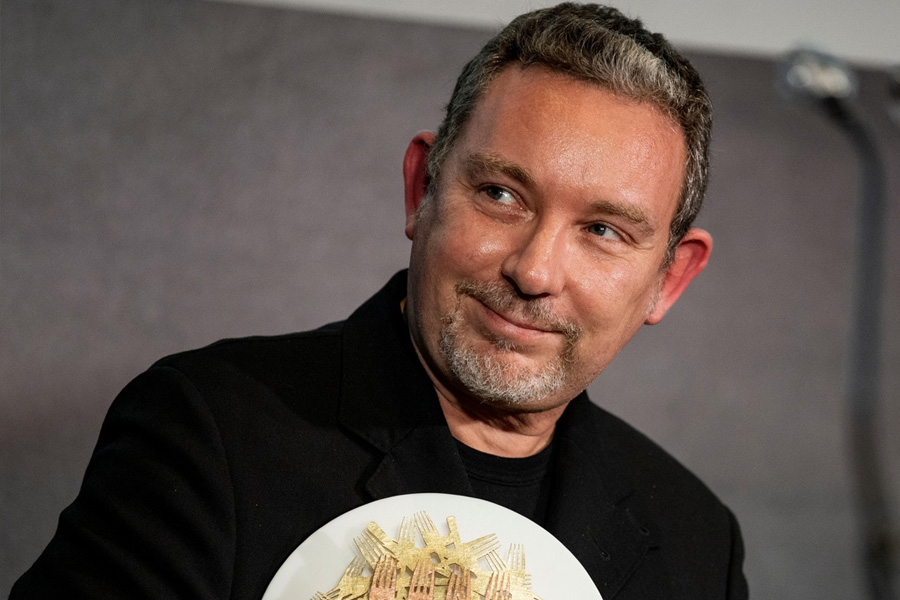
Chef, pastry chef, and restaurateur Albert Adrià was born in L’Hospitalet de Llobregat, near Barcelona, Spain, on October 20, 1969. He inspired cooks to think differently about flavor, texture, and presentation with his innovative approach to modern food. At the famed elBulli restaurant with his older brother Ferran Adrià, he became one of the most significant creative minds in modern gastronomy.
Albert was behind many of elBulli’s most innovative pastry and research & development ideas, while Ferran was its face. His innovations transformed liquids into delicate spheres, sauces into airy foams, and sweets into startling sensory experiences.
Albert’s career is intriguing since it blends technical skill with inventiveness. His cookery goes beyond odd appearance. It involves combining flavor, temperature, texture, and emotion to create an unforgettable experience.
Despite his international fame, Albert has kept his personal life private. His parents and sibling shaped his personality and career.
Early Life and Family Background
Albert grew up in a working family in Catalonia. His father, Ginés Adrià, worked as a plasterer, while his mother, Josefa Acosta, managed the household. Neither parent became famous through the culinary world, yet their home environment helped establish the foundations of Albert’s relationship with food.
Family meals were important occasions, and his father’s enjoyment of good food and aperitifs introduced Albert to the pleasures of eating long before he entered a professional kitchen. One remembered family ritual involved sharing vermouth after football before returning home for a meal prepared by his mother.
These ordinary moments became part of the background against which his extraordinary career developed. Food was not merely a profession waiting to happen. It was already woven into the family’s daily life.
Albert did not follow a conventional academic route. Around the age of 15 or 16, he left formal education and joined elBulli in 1985. He had little professional culinary training at the time, but he entered an environment where experimentation and learning through practice were essential.
His early years were modest. The atmosphere around elBulli was very different from the internationally celebrated culinary institution it would become. Albert has recalled the freedom, camaraderie, and unconventional lifestyle of those years with considerable affection. Curiosity, rather than fame or financial ambition, drove much of his development.
Albert Adrià and His Brother Ferran Adrià
Ferran Adrià, born on May 14, 1962, is Albert’s older brother and one of the most influential chefs in modern culinary history. As the leading creative figure at elBulli, Ferran helped redefine fine dining through radical experimentation and a willingness to challenge established culinary conventions.
Their seven-year age difference did not prevent them from developing an unusually close professional relationship. Ferran introduced Albert to the possibilities of a culinary career, while Albert eventually became a major contributor to the restaurant’s creative work.
Their strengths complemented each other. Ferran became closely associated with the broader philosophy and public identity of elBulli, while Albert developed particular expertise in pastry, textures, and the practical execution of ambitious ideas. Their collaboration demonstrated how a creative kitchen could operate as a team of specialized thinkers rather than simply a hierarchy of cooks.
Albert once expressed the idea that being Ferran’s brother was easier than being Ferran himself, acknowledging the extraordinary sacrifices and pressures attached to his older brother’s position. The remark also hints at the complicated balance between family affection and professional identity.
Their relationship was not simply a matter of sharing a surname. It was a sustained creative partnership that helped influence restaurants across the world.
After elBulli closed as a restaurant in 2011, both brothers continued to contribute to the culinary world through different projects. They have also collaborated on ventures beyond Barcelona, including Mercado Little Spain in New York, developed with Spanish American chef José Andrés.
His Parents Ginés Adrià and Josefa Acosta
Ginés Adrià
Ginés Adrià was Albert’s father and an important early influence on his appreciation of food. He earned his living as a plasterer and lived outside the glamorous world of restaurants, yet he helped establish a family culture in which meals and shared rituals mattered.
His enjoyment of good food and vermouth became part of Albert’s memories of childhood. Such experiences may seem small compared with the elaborate tasting menus Albert later created, but they reflect an essential distinction: technical innovation can transform food, while the pleasure of eating often begins with family and familiarity.
Ginés died in April 2014 after battling cancer. His death marked the loss of a central family figure whose influence was felt more through everyday life than public recognition.
Josefa Acosta
Josefa Acosta, Albert’s mother, was a homemaker who helped create the domestic environment in which Albert and Ferran grew up. Her cooking and the family’s shared meals contributed to their early understanding of food as a source of comfort and connection.
She died in March 2016. Albert and Ferran attended her funeral together in Barcelona, an occasion that brought the brothers back to their family roots after decades of international professional achievement.
Although Josefa did not pursue a public culinary career, her place in the family’s story is significant. The brothers’ achievements developed within a household where food was part of everyday life, not simply a product sold in a restaurant.
Albert Adrià’s Partner and Son
His Partner or Wife
Albert Adrià maintains a relatively private personal life, and information about his romantic relationships is limited. Some accounts identify his wife as Sylvia Adrià, while other descriptions refer more generally to a partner with whom he lives.
Detailed information about their relationship, wedding, and family arrangements is not consistently available. Albert has generally chosen to keep these matters separate from his professional reputation.
That privacy is notable in an industry where celebrated chefs often become public personalities in their own right. Albert’s public identity remains centered on his restaurants, culinary ideas, and collaborations rather than regular disclosures about his household.
His Son Àlex Adrià
Albert has a son named Àlex Adrià, also spelled Alex. In an interview published in 2017, his son was described as being around 10 years old, suggesting a birth around 2007, although an exact birth date is not firmly established.
Albert has spoken about the importance of making more room for family life as his career has developed. The demands of running ambitious restaurants can be relentless, with long working days, late nights, and constant pressure to produce something new.
After the disruptions of the COVID pandemic, he expressed a desire to avoid returning home at midnight so frequently. This ambition reflected a broader effort to balance creative work with personal responsibilities.
His son has remained largely outside the public eye. There is little reliable public information about his education, professional interests, or plans for the future, and Albert’s approach suggests a preference for allowing his child to grow up without the burdens of his father’s fame.
Albert Adrià’s Journey at elBulli
ElBulli hired Albert in 1985, starting a career that changed pastry and creative cookery. After working at various culinary stations, he focused on pastry, partly due to a seafood allergy.
He later studied pastry with Antoni Escribà and Francisco Torreblanca during the restaurant’s off-seasons. He also performed at Guy Savoy in Paris, earning experience outside of elBulli.
In the late 1990s and early 2000s, Albert led elBullitaller, the restaurant’s Barcelona research and development center. The event allowed participants to experiment, test ingredients, document findings, and create recipes for customers.
His work popularized spherification, which generates thin membranes surrounding liquid centers, and culinary foams, which give concentrated flavors in light textures.
Los postres de elBulli, his 1998 pastry book, showed his rising skill. Natura, Las tapas de Tickets, Tickets Evolution, Vegetales a todo color, and Candy followed.
Pastry allowed for experimentation, making Albert’s contribution to elBulli crucial. Desserts could be frozen, aerated, gelled, or reassembled to subvert expectations. He showed that the concluding course of a tasting menu might be as intellectually ambitious as any savory meal.
Molecular Gastronomy and Albert’s Creative Philosophy
Albert Adrià’s work is frequently associated with molecular gastronomy, although the elBulli team also embraced the idea of techno-emotional cuisine. The distinction matters because their objective extended beyond applying scientific principles to food.
Spherification, foams, gels, and rapid freezing were tools for creating new experiences. A familiar flavor could appear in an unfamiliar form, encouraging diners to rethink what they were eating.
For example, spherification can turn an olive preparation into a delicate sphere that releases liquid when bitten. A foam can preserve the character of a sauce while making it remarkably light. Deconstruction can separate the familiar elements of a traditional dish and present them in a different arrangement without abandoning its underlying identity.
Albert’s philosophy has consistently emphasized the relationship between technical possibility and emotional impact. A dish does not become meaningful simply because it requires sophisticated equipment or unfamiliar ingredients. It must still taste good and communicate something to the person eating it.
This approach helped influence a generation of chefs who viewed restaurants as laboratories for creativity. It also encouraged more systematic research and development in professional kitchens.
From Inopia to Enigma
After his formative years at elBulli, Albert began developing restaurant concepts that explored different ways of presenting Spanish food.
In 2006, he opened Inopia Classic Bar in Barcelona. The restaurant helped pioneer the modern gastrobar, combining traditional tapas with careful technique and contemporary presentation.
Around 2010, he partnered with the Iglesias brothers to establish elBarri, a collection of restaurants in Barcelona’s Paral·lel district. The group included Tickets, Bodega 1900, Pakta, Hoja Santa, Niño Viejo, 41º, and Enigma.
Each concept explored a different culinary direction. Tickets reimagined tapas with theatrical flair, Pakta combined Peruvian and Japanese influences, and Hoja Santa explored Mexican cuisine. Several of these restaurants received Michelin recognition.
Albert also expanded his work internationally through projects such as Heart Ibiza, Cakes & Bubbles in London, and Mercado Little Spain in New York.
The COVID pandemic brought severe financial challenges to the restaurant industry and disrupted the elBarri partnership. Several venues closed, and Albert subsequently concentrated more heavily on Enigma, which reopened in Barcelona in 2022 as his own project.
Enigma reflects his interest in creating a complete dining experience through carefully sequenced small dishes, unexpected textures, seasonal ingredients, and controlled surprises.
Awards, Recognition, and Financial Standing
Albert’s achievements have earned international recognition. In 2013, he was recognized by Time magazine among influential figures in gastronomy. In 2015, he received the World’s Best Pastry Chef award from the World’s 50 Best Restaurants organization.
His restaurants have accumulated Michelin stars and other distinctions, demonstrating the breadth of his influence across different culinary formats. Enigma also achieved strong international rankings, including a reported position of number 34 on the World’s 50 Best Restaurants list in 2025.
His recognition has extended to peer honors and chef rankings, reflecting respect from colleagues as well as critics and diners.
Albert’s exact net worth is not publicly established. Online estimates have placed it somewhere around $1 million to $5 million, but these figures should be treated cautiously. They do not necessarily account for the complexities of restaurant ownership, intellectual property, consulting, books, or the financial obligations associated with running ambitious establishments.
Albert has been unusually candid about the economics of creative cuisine. He has described the enormous costs involved in developing and maintaining restaurants and discussed having opened approximately 12 restaurants while closing 11. Rather than presenting closures as purely personal failures, he has treated them as lessons in the difficult relationship between artistic ambition and commercial reality.
His experience demonstrates that culinary innovation requires more than imagination. It also requires financial discipline, a capable team, and a willingness to change direction when circumstances demand it.
Recent Developments and Future Ambitions
Albert developed Enigma in 2024 and 2025 while collaborating and cooking. His ventures include desserts and ice cream, special dining experiences with different chefs, and format experiments.
He also discusses the costs of innovation and the difficulty of keeping inventiveness across decades in his profession. His desire to set trends as he ages shows a desire to stay intellectually active rather than repeat past triumphs.
Tickets’ unique tapas style has also sparked interest in a rebirth. Future project conversations should be segregated from confirmed opportunities.
Albert posts culinary inventions, restaurant developments, collaborations, and professional comments on social media. His web presence shows his career without focusing on his family.
Frequently Asked Questions
When was Albert Adrià born?
Albert Adrià was born on October 20, 1969, in L’Hospitalet de Llobregat, Catalonia, Spain.
Who is Albert Adrià’s famous brother?
His older brother is Ferran Adrià, the internationally renowned chef who led elBulli and helped revolutionize modern fine dining.
Who are Albert Adrià’s parents?
His parents were Ginés Adrià, a plasterer who enjoyed good food, and Josefa Acosta, a homemaker. Both died in the 2010s, with Ginés passing away in April 2014 and Josefa in March 2016.
Is Albert Adrià married?
Some accounts identify his wife as Sylvia Adrià, while other descriptions refer to a partner. Albert keeps details of his romantic relationship and private household largely confidential.
Does Albert Adrià have children?
Yes. He has a son named Àlex, or Alex, Adrià, who was described as being around 10 years old in a 2017 interview.
What is Albert Adrià best known for?
He is best known for his work in avant-garde cuisine and pastry, his contribution to elBulli’s research and development, and his restaurant concepts, including Tickets and Enigma.
What is elBullitaller?
elBullitaller was elBulli’s research and development workshop in Barcelona. It provided a dedicated environment for experimenting with ingredients, developing culinary techniques, and designing new dishes.
What is Albert Adrià’s net worth?
His exact net worth is unknown. Some online estimates suggest approximately $1 million to $5 million, but these figures are speculative and do not provide a verified account of his assets or business interests.
Does Albert Adrià still run a restaurant?
Yes. Enigma in Barcelona has been his principal restaurant project since its reopening in 2022. It reflects his continuing interest in experimental cuisine and immersive dining experiences.
What makes Albert Adrià different from Ferran Adrià?
Ferran became widely known for leading elBulli’s overall culinary revolution, while Albert made particularly important contributions to pastry, research and development, and the creation of distinctive restaurant concepts. Their complementary talents helped make elBulli one of the most influential restaurants in modern gastronomic history.