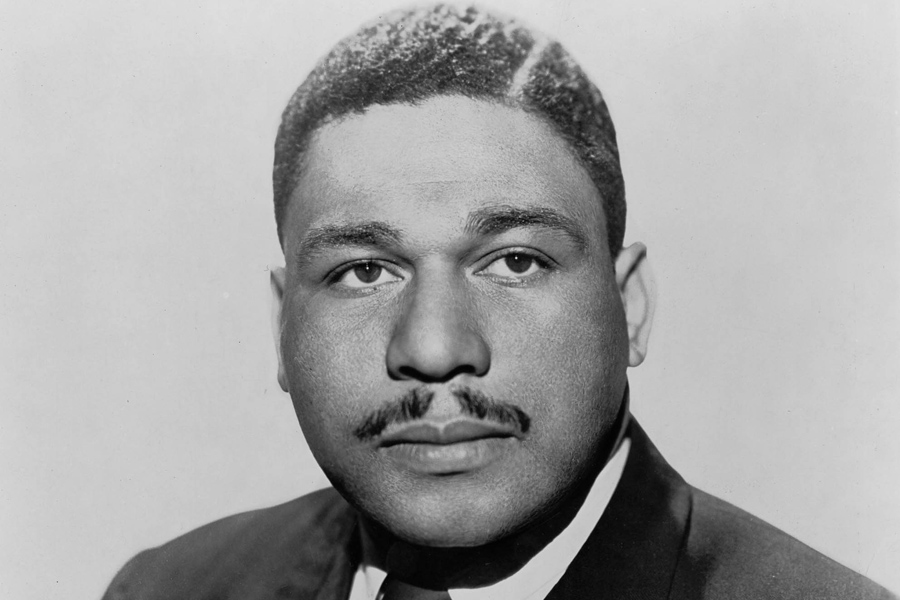
Who Was Frederick O Neal?
Frederick O Neal was an American actor, theater producer, director, and labor leader whose influence extended far beyond the stage. Born on August 27, 1905, and passing away on August 25, 1992, he devoted much of his life to expanding opportunities for African American performers and challenging discrimination within the entertainment industry. His work helped reshape American theater during a period when Black artists faced considerable barriers to professional recognition.
Although O Neal earned acclaim for his acting, his greatest achievement may have been building institutions that allowed other performers to flourish. In 1940, he co-founded the American Negro Theatre in Harlem, New York, alongside playwright Abram Hill. The organization became an important launching pad for performers such as Sidney Poitier, Harry Belafonte, and Ruby Dee.
His historic election as the first African American president of the Actors’ Equity Association in 1964 added another chapter to his remarkable career. Yet behind these public accomplishments stood a man with a family history rooted in Mississippi, a marriage that lasted five decades, and a determination to create lasting change.
Frederick O Neal Basic Biography
The following table summarizes the essential details of his life and career.
| Detail | Information |
|---|---|
| Full name | Frederick Douglas O Neal |
| Date of birth | August 27, 1905 |
| Place of birth | Brooksville, Mississippi, United States |
| Date of death | August 25, 1992 |
| Age at death | 86 |
| Nationality | American |
| Profession | Actor, theater producer, director, labor leader |
| Father | Teacher and merchant, name not widely documented |
| Mother | Name not widely documented |
| Siblings | Seven brothers and sisters |
| Wife | Charlotte Talbot Hainey |
| Marriage date | April 18, 1942 |
| Known children | No publicly documented children |
| Notable organization | American Negro Theatre |
| Historic leadership role | First African American president of Actors’ Equity Association |
| Major recognition | NAACP Man of the Year, 1979 |
| Final residence | Manhattan, New York |
Early Life and Family Background in Mississippi
Frederick Douglas O Neal was born August 27, 1905, in Brooksville, Mississippi. His parents named him after Frederick Douglass, an abolitionist and African American freedom fighter. O Neal’s youth and career were impacted by racial inequality, making that relationship particularly relevant.
His father taught and sold. These jobs gave the family some security during a time when segregation drastically limited Black Americans’ economic and educational options.
O Neal was raised in a huge home with seven siblings. Limited biographical material implies that the family owned property and did not suffer the worst economic hardships common among rural Southern African American households at the period.
After O Neal’s father died in 1919, family life changed drastically. The family moved to St. Louis after selling their property. This shift introduced O Neal to an urban setting where his theater love could grow, changing his life.
His Parents and the Influence of Family
O Neal’s father played an important role in establishing the family’s early circumstances. As a teacher and merchant, he occupied two positions that required knowledge, communication, and practical judgment. Although there is insufficient public information to establish precisely how his father’s work influenced his theatrical ambitions, O Neal’s later career demonstrated a similar combination of intellectual curiosity and organizational ability.
His father’s death when O Neal was still a teenager meant that the family had to adjust to a different financial and social reality. Selling their property and moving to St. Louis represented more than a change of address. It marked the beginning of a new chapter in which O Neal would gradually discover his own professional direction.
The identity of his mother remains difficult to establish from widely available biographical accounts. She was part of the family that navigated the aftermath of her husband’s death and the subsequent move, but detailed information about her personal life has not been widely documented.
I find this absence of information worth acknowledging rather than filling with speculation. O Neal’s public legacy is well established, but the private stories of his parents deserve the same factual care.
Frederick O Neal’s Seven Siblings and Family Connections
O Neal grew up alongside seven brothers and sisters. Despite the size of the family, the names and individual biographies of most of his siblings have not been widely preserved in published accounts.
One brother, John O Neal, is specifically documented as having died in 1968. His death appears among the family materials associated with Frederick O Neal’s personal papers. Beyond this detail, the public record provides limited information about John’s occupation, relationships, or life outside the family.
The lack of extensive information about the other siblings does not diminish their place in O Neal’s personal history. They shared his early years in Mississippi and experienced the family’s transition to St. Louis following their father’s death.
For a person whose professional life became part of American theatrical history, the relative obscurity of his siblings highlights a familiar distinction between public achievement and private family life. O Neal’s name entered theater histories, while many details about the people closest to him remained within family records.
Discovering Theater in St. Louis
St. Louis became the city where O Neal’s childhood interest in performance developed into a serious ambition. As a teenager, he participated in neighborhood shows and amateur theatricals, discovering the possibilities of acting at a time when professional opportunities for Black performers were sharply limited.
By 1927, he had begun working professionally. He also established the Aldridge Players, a Black theater group named after Ira Aldridge, the celebrated nineteenth-century African American actor who gained recognition on European stages.
The company remained active for approximately eight years and received support from the St. Louis Urban League. Its activities gave O Neal valuable experience in organizing productions, developing performers, and managing a theater company.
These early years helped him understand that a successful theatrical career required more than talent. Actors needed access to stages, supportive organizations, and opportunities to demonstrate their abilities. O Neal would carry that understanding with him throughout his life.
Building the American Negro Theatre in Harlem
In the mid-1930s, O Neal moved to New York City, where he studied acting while working as a laboratory assistant. His training included the New Theatre School, the American Theatre Wing, and private instruction. He also performed with the Civic Repertory Theatre and the Federal Theatre Project’s Negro Unit.
After gaining experience with other theatrical organizations, he helped establish the Rose McClendon Players. His most influential undertaking, however, began on June 5, 1940.
That day, O Neal and playwright Abram Hill co-founded the American Negro Theatre in Harlem. The organization initially operated in the basement of the 135th Street Branch of the New York Public Library, now associated with the Schomburg Center for Research in Black Culture.
The setting was modest, but the ambition was substantial. The company sought to create professional opportunities for Black actors and produce plays that reflected African American experiences rather than relying on the narrow stereotypes that dominated much of mainstream entertainment.
O Neal served as co-chairman and company manager, helping transform the theater into a practical training ground for aspiring performers. Its community included Sidney Poitier, Harry Belafonte, Ruby Dee, Earle Hyman, and Alice Childress.
The company’s 1944 production of Anna Lucasta transferred to Broadway, becoming a landmark in its history. For O Neal, the theater was not simply a place to perform. It was a bridge between talent and opportunity, built during a period when the entertainment industry offered Black artists too few crossings.
Acting Success and Professional Recognition
O Neal’s own acting career gained national attention through Anna Lucasta. He originated the role of Frank, a comic and often domineering character whose greed and bullying made him memorable.
His performance earned three important honors: the Clarence Derwent Award, the New York Drama Critics’ Award for best supporting performance, and the Donaldson Award. These distinctions established him as a respected stage actor and demonstrated that his work could attract serious critical attention.
He later reprised the role in Chicago, London, and the film adaptation. Other notable theatrical productions included Take a Giant Step, House of Flowers, Lost in the Stars, Shakespeare in Harlem, God’s Trombones, and Ballad for Bimshire.
His film credits included Pinky in 1949, No Way Out, Something of Value in 1957, Anna Lucasta, Take a Giant Step, The Sins of Rachel Cade, and Free, White and 21.
Television brought him into American households through appearances on Car 54, Where Are You?, where he played Officer Wallace, as well as dramatic anthology programs such as Kraft Suspense Theatre and Hallmark Hall of Fame.
His career was interrupted at times by the political pressures of the blacklist era. Nevertheless, he continued to contribute to theater and screen performance while pursuing his broader commitment to civil rights and professional equality.
Frederick O Neal’s Marriage to Charlotte Talbot Hainey
Frederick O. Neal married Charlotte Talbot Hainey in Manhattan on April 18, 1942. Charlotte was born April 16, 1914, in Brooklyn to Martin Joseph and Mary Ellen Hainey.
Biographical and census records show she was a receptionist before their marriage. O Neal was drafted into the military shortly after their wedding, presenting an early challenge.
The pair wedded for 50 years until his August 1992 death. Their long relationship was one of his most enduring aspects, especially given his career’s theatrical productions, union responsibilities, public appearances, and political involvement.
Charlotte lived secretly and didn’t have a public profile like other celebrities’ spouses. Thus, her life, interests, and career support of O Neal are little described.
She died at 96 on May 5, 2010, nearly eighteen years after her husband.
Their marriage is quieter in O Neal’s history. While his career evolved on public platforms and in union meetings, his family life was mostly hidden.
Did Frederick O Neal Have Children?
One question that naturally arises when exploring Frederick O Neal’s family is whether he had children.
Publicly available biographical accounts and obituaries do not identify any children from his marriage to Charlotte Talbot Hainey. His wife is consistently identified as his surviving immediate family member at the time of his death.
However, the absence of documented children should be interpreted carefully. It establishes that no children are widely identified in the available public record, not that every aspect of the couple’s private family circumstances is known.
O Neal’s papers include personal and family materials, but these have not produced a widely circulated account establishing that he had children.
For readers interested in genealogy, this distinction matters. A lack of published information is not always definitive proof that a family relationship never existed.
Union Leadership and the Fight for Equality
O Neal’s influence extended beyond acting and theater management. In 1958, he joined the council of the Actors’ Equity Association, the labor organization representing professional stage actors and stage managers.
In 1964, he became the association’s first African American president. He held the position until 1973 and later received the title of president emeritus.
His leadership came during a period of significant social change in the United States. Discrimination in casting, unequal employment opportunities, and limited access to professional networks continued to restrict Black performers. O Neal used his position to challenge these practices and advocate for better working conditions.
He also served as president of the Associated Actors and Artistes of America from 1970 to 1988. His responsibilities included broader labor and civil rights advocacy through the AFL-CIO, where he served as a vice president, sat on the executive council, and chaired its Civil Rights Committee.
His activism was sufficiently prominent that he appeared on President Richard Nixon’s master list of political opponents.
O Neal’s career therefore combined two forms of leadership: creating institutions where Black performers could develop their craft and working within established organizations to make the entertainment industry more equitable.
Awards, Honors, and Financial Standing
Over the years, O Neal received recognition for his acting, public service, and contribution to African American culture.
| Year | Honor or achievement |
|---|---|
| 1944 | Clarence Derwent Award for his performance in Anna Lucasta |
| 1944 | New York Drama Critics’ Award for best supporting performance |
| 1944 | Donaldson Award |
| 1975 | Induction into the Black Filmmakers Hall of Fame |
| 1979 | NAACP Man of the Year recognition |
| 1981 | Honorary Doctor of Human Letters from St. John’s University |
| 1990 | Special tribute from the Black Filmmakers Hall of Fame |
He also received recognition from the National Urban League, the Black Heritage Association, and the Canada Lee Foundation. His service on organizational boards further reflected his standing in cultural and civic circles.
His personal wealth, however, is not well documented. No reliable, widely established net-worth figure is available.
Before becoming firmly established in theater, he worked as a laboratory assistant and pursued other business activities, including advertising and valet services. His subsequent career involved acting, producing, directing, and union leadership.
Although these activities provided professional income, it would be misleading to assign him a specific fortune without reliable financial records. His historical importance rests primarily on his artistic achievements, labor advocacy, and institution-building rather than on a publicly documented financial empire.
Frederick O Neal’s Final Years and Death
Frederick O. Neal died at his Manhattan home on August 25, 1992, after a long illness. 86, he would have turned 87 two days later.
A career spanning generations of American theater ended with his death. He witnessed Black theatrical organizations’ early challenges, Broadway’s rise, the blacklist’s political tensions, and the 1960s and 1970s labor and civil rights movements.
Charlotte lived until 2010, when she died at 96.
The Schomburg Center for Research in Black Culture in New York holds O Neal’s personal documents, photographs, letters, and audio and video resources. His business interactions, family correspondence, organizational duties, and theater activity are illuminated by these records.
His archive is important since it preserves public career details. Letters, production records, and organizational documentation show how cultural revolutions were supported by those who worked beyond their best performances.
Frequently Asked Questions About Frederick O Neal
Who was Frederick O Neal?
Frederick O Neal was an American actor, theater producer, director, and labor leader. He co-founded the American Negro Theatre in 1940 and became the first African American president of the Actors’ Equity Association in 1964.
When and where was Frederick O Neal born?
He was born on August 27, 1905, in Brooksville, Mississippi. After his father’s death in 1919, his family moved to St. Louis, Missouri, where his interest in acting developed.
Who was Frederick O Neal’s wife?
His wife was Charlotte Talbot Hainey, whom he married on April 18, 1942, in Manhattan. Their marriage lasted fifty years, ending with his death in 1992.
Did Frederick O Neal have any children?
No children are identified in widely available biographical accounts or major obituaries. However, this reflects the limits of the public record rather than definitive proof about every aspect of his private family life.
How many siblings did Frederick O Neal have?
O Neal grew up with seven brothers and sisters. One brother, John O Neal, is documented as having died in 1968, while detailed information about the other siblings remains limited.
What was Frederick O Neal’s most important theatrical achievement?
Co-founding the American Negro Theatre with Abram Hill in 1940 was one of his most significant achievements. The company helped develop Black theatrical talent and contributed to the Broadway success of Anna Lucasta in 1944.
Why was Frederick O Neal important to Actors’ Equity Association?
In 1964, O Neal became the first African American president of Actors’ Equity Association. He served until 1973 and advocated for fairer employment conditions, greater inclusion, and improved opportunities for minority performers.
What awards did Frederick O Neal receive?
His honors included the Clarence Derwent Award, the New York Drama Critics’ Award, the Donaldson Award, NAACP Man of the Year recognition in 1979, and an honorary Doctor of Human Letters from St. John’s University in 1981.
What was Frederick O Neal’s net worth?
His net worth has not been reliably established in publicly available records. Although he worked as an actor, producer, and labor leader, there is no widely verified figure documenting his total wealth.
When did Frederick O Neal die?
He died on August 25, 1992, at his home in Manhattan, New York, after a lengthy illness. He was survived by his wife, Charlotte Talbot Hainey, who died in 2010.
Where are Frederick O Neal’s personal papers preserved?
His papers and related historical materials are held at the Schomburg Center for Research in Black Culture, part of the New York Public Library. The collection includes professional documents, correspondence, and family-related materials that help preserve his life story.