Who Was Paul Wight Sr.?
Popular wrestling icon Paul Donald Wight II, known as Big Show, was the son of American mechanic Paul Wight Sr. In Aiken County, South Carolina, he worked at the Savanna River Site and raised his family in a small, working-class home. Though he never sought fame, his impact is part of his son’s biography.
In contrast to his famous son, Paul Wight Sr. led a quiet life. The few data about his life show a hardworking parent whose discipline, presence, and family values left an imprint.
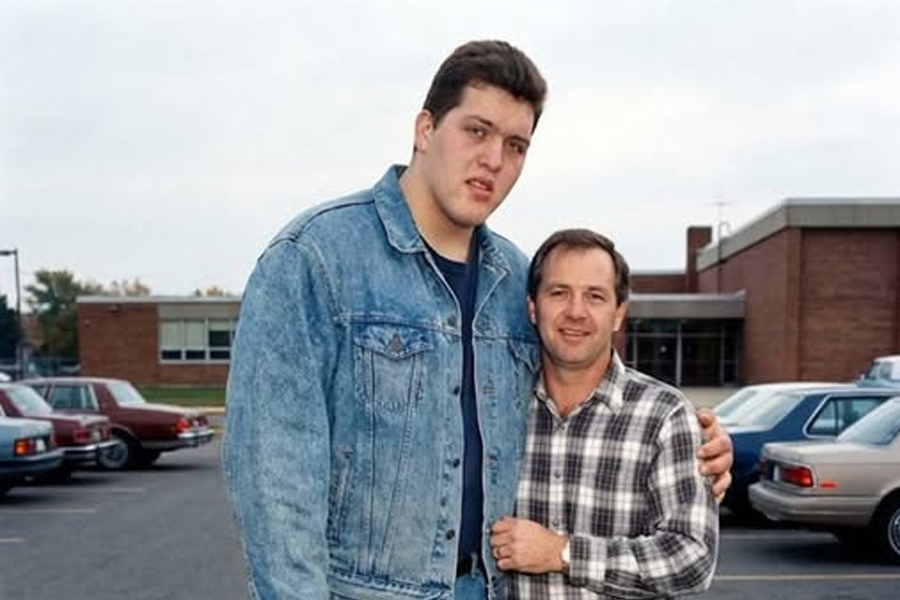
The man was characterized as large and solid, standing 6 feet 3 inches to 6 feet 5 inches. His son remembered his intimidating stature. His significance went beyond inches. Through family stories, he appears as a father who valued accountability and expected his children to appreciate their caregivers.
Early Life and Background in South Carolina
Detailed information about Paul Wight Sr.’s childhood, education, and early adult years remains largely undocumented. His exact birth date and birthplace have not been firmly established in widely available biographical accounts. Most known details begin with his adult life in South Carolina and his role as a husband and father.
The Wight family lived in the Aiken County region, including the rural New Holland area. Their surroundings offered a traditional small-town upbringing, far removed from the bright lights and packed arenas that would eventually define the younger Paul Wight’s career.
Family life included ordinary childhood adventures, such as riding bicycles along dirt roads, exploring the woods, and building forts. These memories reveal a childhood shaped by open spaces and everyday experiences rather than celebrity culture.
Paul Wight Sr. worked to provide for his family, and his employment as a mechanic placed him firmly within the working community of the region. His life reflected a familiar pattern: long hours, family responsibilities, and a home where children learned about the world through practical experiences.
Career as a Mechanic at the Savannah River Site
Paul Wight Sr. worked as a mechanic at the Savannah River Site, a major United States Department of Energy facility near Aiken, South Carolina. The site has played an important role in the country’s nuclear materials and environmental management operations.
His specific duties, length of employment, and professional achievements have not been publicly documented in detail. Nevertheless, his occupation provides an important clue to the family’s circumstances. He held a practical job that helped support his household while raising children in rural South Carolina.
There is no reliable public estimate of his salary, personal wealth, or net worth. Assigning him a specific financial figure would be speculation. His son eventually earned considerable recognition and financial success through professional wrestling, but that later prosperity should not be confused with his father’s circumstances.
Paul Wight Sr.’s career did not produce the kind of headlines associated with sports championships or entertainment awards. Its importance was quieter. He worked, supported his family, and helped establish the foundation from which his children developed their own lives.
Marriage to Dorothy Wight
Dorothy Wight was Paul Wight Sr.’s wife and the mother of his children. She is remembered through accounts of the family’s life in South Carolina and her observations about their son’s extraordinary growth during childhood.
Dorothy was reportedly around 5 feet 10 inches tall and worked at one point as a deputy with the Aiken County Sheriff’s Department. Her professional experience and family responsibilities placed her in a different role from her husband’s work as a mechanic, but together they raised their children in a household shaped by everyday responsibilities.
Dorothy later discussed her son’s unusual size, appetite, and childhood development. She recalled signs that he was growing far more rapidly than other children and described concerns that eventually became relevant to his diagnosis of acromegaly.
Her recollections help fill gaps in the family’s history. While Paul Wight Sr. rarely appears independently in public accounts, Dorothy’s perspective provides a window into the household he helped build.
Their marriage is not extensively documented, and details about when they married or how their relationship developed remain uncertain. What is clearer is that they shared the responsibility of raising a son whose physical development would eventually attract national attention.
Paul Wight II and His Father’s Influence
Paul Donald Wight II was born on February 8, 1972, in Aiken, South Carolina. He later became famous as The Giant in World Championship Wrestling and as Big Show in World Wrestling Entertainment. He subsequently performed under the name Paul Wight in All Elite Wrestling.
His father was an important presence during his formative years. Paul Wight II grew into an exceptionally large young man, but his size was not simply a matter of family genetics. He was diagnosed with acromegaly, a hormonal disorder commonly caused by a pituitary tumor that leads to excessive growth hormone production.
The condition contributed to his unusual physical development. In the early 1990s, he underwent surgery to address the pituitary problem. That period brought major personal and medical challenges just as he was trying to establish himself through college basketball at Wichita State University.
Paul Wight Sr. died of cancer around 1991 or 1992, during a difficult period in his son’s young adulthood. The loss came close to the time of Paul’s medical treatment and college basketball experiences, creating an emotionally demanding chapter in his life.
His father’s death left a mark on the younger Wight. Although the two men did not share the same public career, the relationship remained meaningful in the stories Paul later told about his childhood.
A Childhood Lesson About Respect and Gratitude
A sister-made birthday cake is one of Paul Wight II’s earliest memories. He was disciplined by his father for resenting the cake at nine years old.
It may seem insignificant, yet family memories often come from these everyday situations. After the class, Paul thought about his father and his respect. Because of respect, he never contemplated challenging his father as he grew older.
The narrative shows Paul Wight Sr.’s parenting style. He expected his children to appreciate gifts and respect family. The lesson wasn’t about cake. It was about thankfulness, etiquette, and acknowledging others’ efforts.
Parents’ impact can last long beyond childhood, as seen by such recollections. Paul Wight II performed to huge audiences, played larger-than-life roles, and built a career around his physical presence. However, his memories of his father focus on family more than wrestling.
The Family’s Working Class Roots and Rural Childhood
The Wight family’s South Carolina upbringing provided a contrast to the world Paul Wight II eventually entered. Before television appearances, championship matches, and international tours, there were dirt roads, wooded areas, bicycles, and family routines.
These details help explain why Paul Wight Sr. remains relevant to his son’s biography. His role was not to prepare a future celebrity for the entertainment business. Instead, he was part of the everyday environment in which a child developed his personality and understanding of family.
Paul Wight II has also recalled his father’s support during a youthful decision to leave football and join the cheerleading squad. That choice demonstrated a willingness to challenge expectations and pursue an unconventional path. His father’s response, as remembered by his son, suggests that their relationship included room for individuality alongside discipline.
The contrast is striking. The man remembered as a physically imposing mechanic helped raise a son who would later become a global wrestling attraction. Yet their connection was rooted in ordinary family life, not the spectacle that eventually surrounded the younger Wight.
His Daughter and Other Family Relationships
Paul Wight Sr. and Dorothy Wight had more than one child. At least one daughter is mentioned in recollections of the family’s life, including the birthday cake story involving her younger brother. Her name and personal background have not been consistently documented in public accounts.
This limited information reflects the family’s preference for privacy, or at least the absence of extensive public reporting about its members. It would be misleading to invent details about the daughter’s occupation, marriage, or current life.
The family dynamic nevertheless appears in Paul’s memories through small but meaningful interactions. A sister who made a birthday cake, a father who insisted on gratitude, and a mother who paid close attention to her son’s health all contribute to a fuller picture of the household.
Paul Wight Sr.’s identity is therefore connected not only to his famous son but also to a family whose everyday experiences shaped their relationships with one another.
Granddaughter Cierra Wight and the Next Generation
Paul Wight Sr. became a grandfather through his son Paul Wight II. His granddaughter Cierra Wight was born on November 28, 1998, to Paul and his first wife, Melissa Ann Piavis.
Paul Wight II and Melissa married in 1997 and divorced in 2002. Cierra has generally maintained a relatively low public profile compared with her father, whose wrestling career made him internationally recognizable.
Because Paul Wight Sr. died around 1991 or 1992, he passed away several years before Cierra’s birth. He therefore did not have the opportunity to know his granddaughter as she grew up.
Paul Wight II later married Bess Katramados in 2002. Public accounts commonly refer to two additional children from that marriage, although some details, including names and other personal information, are reported inconsistently. These younger children also belong to the wider family legacy associated with Paul Wight Sr.
The generations illustrate how a person’s influence can continue through family stories even when direct relationships are no longer possible. Cierra and her younger relatives represent a family branch that Paul Wight Sr. did not live to see develop.
Paul Wight Sr.’s Death and Its Impact on His Son
Paul Wight Sr. died of cancer around 1991 or 1992. The exact date and type of cancer have not been firmly established in the available biographical details.
His death coincided with a period of uncertainty for his son. Paul Wight II was dealing with the consequences of acromegaly, recovering from pituitary surgery, and navigating his future in college basketball. Losing a parent during such a formative period can add emotional weight to already difficult decisions.
For the younger Wight, the loss was not merely a biographical detail. It became part of the personal history behind his transition from an unusually large young athlete into a professional wrestling star.
Some wrestling storylines later incorporated fictionalized versions of a father’s death. These scripted performances belonged to the world of wrestling entertainment and should not be treated as factual accounts of Paul Wight Sr.’s life or passing.
The real story is less theatrical but more personal: a father died relatively young, leaving behind a family and a son who continued to carry his memories into adulthood.
Public Recognition and Online Information
Paul Wight Sr. has no public entertainment, athletic, or public personality career. His name is mostly associated with Big Show’s family, childhood, health, and memories.
Few details are known regarding his early education, age, extended family, or finances. An online family tree graphic has birth and death dates of 1958 and 1992 and a different mother’s name. These details are unconfirmed and should not be believed.
He has no social media or recent personal news of note. The image of his life is inadequate because he died decades ago and lived in private.
His narrative shows how public exposure differs from personal significance. Although Paul Wight Sr. was not recognized, his role in a prominent wrestling figure saved parts of his life for later generations.
Frequently Asked Questions About Paul Wight Sr.
Who was Paul Wight Sr.?
Paul Wight Sr. was a South Carolina mechanic best known as the father of professional wrestler Paul Donald Wight II, also known as Big Show. He lived in the Aiken County area and helped raise his family in a working-class household.
What did Paul Wight Sr. do for a living?
He worked as a mechanic at the Savannah River Site near Aiken, South Carolina. Detailed records of his job responsibilities, salary, and career progression are not widely available.
Who was Paul Wight Sr.’s wife?
His wife was Dorothy Wight. She was reportedly around 5 feet 10 inches tall and worked at one point as a deputy with the Aiken County Sheriff’s Department. She later shared memories of her son’s childhood growth and health.
How tall was Paul Wight Sr.?
He was described as approximately 6 feet 3 inches to 6 feet 5 inches tall and solidly built. The difference between reported measurements means that his exact height is uncertain.
When did Paul Wight Sr. die?
He reportedly died of cancer around 1991 or 1992. His death occurred during a challenging period in his son Paul’s early adulthood, when the younger Wight was also dealing with acromegaly and its treatment.
How many children did Paul Wight Sr. have?
He and Dorothy Wight had multiple children, including Paul Donald Wight II and at least one daughter. The daughter’s name and other personal details have not been consistently established in public accounts.
Who are Paul Wight Sr.’s grandchildren?
His known family line includes Cierra Wight, the daughter of Paul Wight II and Melissa Ann Piavis, born on November 28, 1998. Paul Wight II also has children with his second wife, Bess Katramados, although publicly reported details about them vary.
What was Paul Wight Sr.’s net worth?
No reliable public estimate of his net worth exists. His documented employment as a mechanic suggests a working life centered on supporting his family, but his income, savings, property, and other financial details remain unknown.
Did Paul Wight Sr. influence Big Show’s personality?
Paul Wight II has shared childhood memories that highlight his father’s emphasis on respect, gratitude, and personal accountability. These stories suggest that his father helped shape his understanding of family and discipline, even though the full details of their relationship remain private.
Is Paul Wight Sr. still alive?
No. Paul Wight Sr. reportedly died in the early 1990s. His memory survives primarily through family recollections and the biographical story of his son, Big Show.