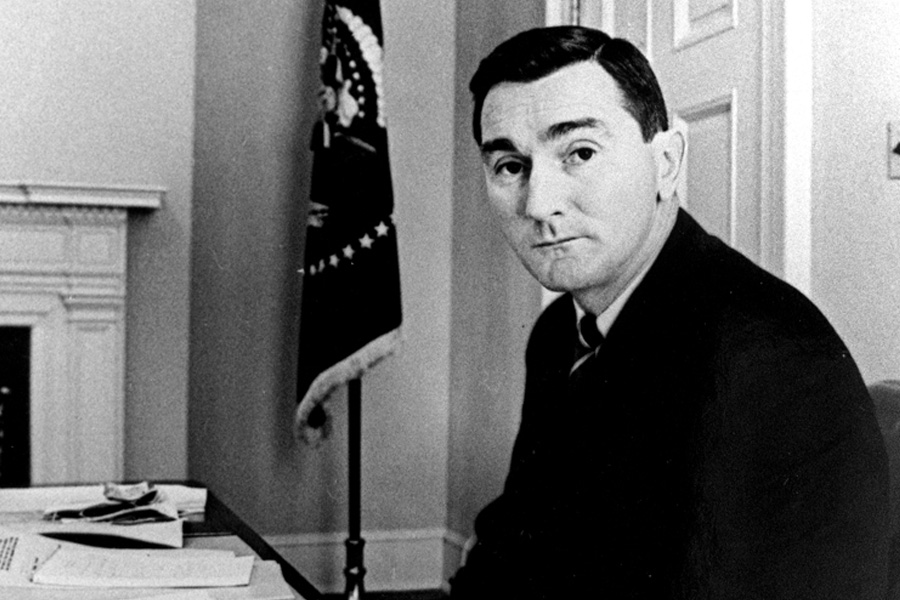
Basic Information About Kenneth O Donnell
Kenneth Patrick O’Donnell, widely known as Kenny O’Donnell, was an American political strategist whose life became closely intertwined with the Kennedy family and one of the most consequential periods in American political history. Born on March 4, 1924, in Worcester, Massachusetts, he rose from a working-class Irish American family to become one of President John F. Kennedy’s most trusted aides. His career combined military service, political organization, personal loyalty, and an unusually close relationship with the Kennedy brothers.
| Category | Details |
|---|---|
| Full name | Kenneth Patrick O’Donnell |
| Common name | Kenny O’Donnell |
| Date of birth | March 4, 1924 |
| Place of birth | Worcester, Massachusetts, United States |
| Date of death | September 9, 1977 |
| Place of death | Boston, Massachusetts, United States |
| Age at death | 53 |
| Nationality | American |
| Profession | Political strategist, presidential aide, consultant, author |
| Father | Cleo Albert O’Donnell |
| Mother | Alice M. Guerin O’Donnell |
| First wife | Helen Sullivan |
| Second wife | Asta Hanna Helga Steinfatt |
| Children | Five with Helen Sullivan |
| Education | Harvard University and Boston College Law School |
| Political affiliation | Democratic Party |
| Notable book | Johnny, We Hardly Knew Ye |
| Burial place | Holyhood Cemetery, Massachusetts |
O’Donnell’s public identity was built around his work behind the scenes. He was not a president, senator, or nationally prominent elected official, yet he occupied a position where a conversation, appointment, or scheduling decision could influence the course of political events. His story also reveals the personal cost of living so close to power, particularly when the people he served became victims of political violence.
Early Life and the O Donnell Family Background
Kenneth O’Donnell grew up in a family shaped by Irish Catholic traditions, education, and athletics. His father, Cleo Albert O’Donnell, was a respected football coach whose career included positions at the College of the Holy Cross, Purdue University, Saint Anselm College, and various high schools. He later worked as an athletics director.
Football was more than a pastime in the O’Donnell household. It represented discipline, teamwork, and the pursuit of excellence, qualities that would later become useful in Kenneth’s political career. His upbringing in Massachusetts also placed him within the cultural environment of Irish American communities that would become important to the Kennedy political network.
His mother, Alice M. Guerin O’Donnell, helped anchor the family while her husband pursued a demanding career in athletics. Although relatively little public information survives about her personal life, she was part of the family foundation from which Kenneth and his siblings emerged.
Kenneth’s older brother, Cleo O’Donnell Jr., born in 1921, also distinguished himself in football at Harvard. He subsequently worked as a coach and engineer. Another brother, Warren O’Donnell, played football at Holy Cross.
Growing up among accomplished athletes helped create an environment in which achievement and competition were familiar. Kenneth eventually carried those lessons beyond the football field, applying them to political campaigns where preparation, timing, and teamwork mattered enormously.
Military Service During World War II
Before becoming a trusted presidential aide, O’Donnell experienced the dangers of war firsthand. He enlisted in the United States Army Air Forces during World War II and served from approximately 1942 to 1945.
As a B-17 bomber bombardier, he participated in roughly 30 missions over Europe. His service was marked by a particularly dangerous episode when his aircraft was shot down over Belgium. He was captured but managed to escape despite being wounded.
The experience demanded courage, endurance, and quick judgment. O’Donnell received the Distinguished Flying Cross and the Air Medal with additional recognitions for his service.
War changed the circumstances of his life, but it did not prevent him from pursuing higher education. After returning to civilian life, he entered Harvard University, where his personal and professional future would take a decisive turn.
Harvard University and His Friendship With Robert F Kennedy
O’Donnell attended Harvard University and earned a bachelor’s degree in government in 1949. He also became a prominent member of the university’s football team, eventually serving as captain.
At Harvard, he roomed with and played football alongside Robert F. Kennedy. Their relationship grew from shared experiences in an intensely competitive academic and athletic environment into a lifelong political friendship.
Robert Kennedy came from a wealthy and influential family, while O’Donnell brought a different perspective shaped by his Massachusetts upbringing, military service, and practical temperament. Their differences did not prevent them from developing mutual trust.
That friendship became the bridge between O’Donnell and the Kennedy political organization. Robert Kennedy later recruited him into campaign work, recognizing his organizational ability and capacity for discreet, direct advice.
O’Donnell also attended Boston College Law School around 1950 and 1951, although his eventual career moved toward politics rather than conventional legal practice. He initially worked in sales and public relations before dedicating himself more fully to Democratic campaigns.
Building a Career in Kennedy Politics
O’Donnell began working with John F. Kennedy’s political organization during Kennedy’s early congressional campaigns. By the 1952 Senate campaign, he had become involved in the growing operation that would eventually carry Kennedy to the White House.
From 1957 to 1959, he worked as an assistant counsel associated with the Senate Labor Rackets Committee under Robert Kennedy. The assignment exposed him to the complicated relationship between politics, labor organizations, investigations, and public accountability.
His talents became especially valuable during Kennedy’s 1960 presidential campaign. O’Donnell helped coordinate the campaign’s organization and schedule, ensuring that the candidate’s time was directed toward events and meetings considered most important.
Presidential campaigns are often remembered through speeches, television appearances, and election-night celebrations. Yet much of their success depends on people whose names rarely appear in headlines. O’Donnell belonged to this essential backstage group.
His approach was practical rather than theatrical. He understood that a candidate could not be everywhere at once and that even a small scheduling error might disrupt an elaborate campaign plan.
Kenneth O Donnell as John F Kennedy’s White House Gatekeeper
After Kennedy became president in January 1961, O’Donnell became White House special assistant and appointments secretary. He held this position until Kennedy’s assassination on November 22, 1963.
Appointments secretary was more than a calendar manager. Who could meet the president, organize the daily routine, coordinate travel, and safeguard the president’s limited time from conflicting demands were the duties.
An informal coterie of trusted Kennedy advisers called the “Irish Mafia” included O’Donnell. David Powers and Larry O’Brien were also notable. Their nickname emphasized their closeness and Irish American heritage, although their roles diverged.
O’Donnell worked quietly and intimidatingly. According to Kennedy administration accounts, he was protective of the president and eager to oppose time-wasting or complicated initiatives.
He was part in the government during the Bay of Pigs invasion and Cuban Missile Crisis. He was more organizational and advisory than a top foreign policy decision-maker.
Kennedy was assassinated in Dallas on November 22, 1963, when O’Donnell was in a follow-up car in the presidential motorcade. He later became part of that day’s history.
He recounted the shooting to the Warren Commission. Later stories and conversations questioned how witnesses remembered shooting direction. O’Donnell’s official testimony and recollections have been explored in the historical debate, although interpretations should be distinguished from results.
The assassination deeply disturbed him. He helped organize the Dallas trip and was close to Kennedy, making the tragedy a personal and professional loss.
Working With Lyndon B Johnson and Robert F Kennedy
Following Kennedy’s death, O’Donnell remained in government as an aide to President Lyndon B. Johnson. He helped with the transition and remained connected to the Democratic administration until early 1965.
The change in presidents required him to adjust to a different leadership style. His relationship with Johnson was not identical to the bond he had shared with Kennedy, but his experience made him useful during a difficult period of national transition.
O’Donnell subsequently returned to Democratic politics in Massachusetts. He sought the Democratic nomination for governor in 1966 and again in 1970, although neither campaign resulted in his election.
His political work continued nationally in 1968, when he advised Robert F. Kennedy’s presidential campaign. Robert Kennedy’s assassination that June brought another devastating loss. O’Donnell later assisted Hubert Humphrey’s presidential campaign.
By this point, his professional life had been marked by the deaths of two brothers whose political careers had shaped his own. His continued involvement in politics demonstrated his commitment to the Democratic Party, but the emotional burden of repeated tragedy became an important part of his later story.
Marriage to Helen Sullivan and Their Five Children
Helen Sullivan was O’Donnell’s first wife. The couple married in 1947, while he was attending Harvard University, and built a family during the years when his political responsibilities steadily expanded.
They had five children: three sons and two daughters. Their names appear in accounts of O’Donnell’s life, although most maintained relatively private lives compared with the political figures who surrounded their father.
The children were growing up while their father worked increasingly long hours in presidential politics. His professional responsibilities often placed him in Washington, while the family’s roots remained connected to Massachusetts.
| Family member | Relationship | Known details |
|---|---|---|
| Helen Sullivan | First wife | Married Kenneth in 1947; died in January 1977 |
| Kenneth O’Donnell Jr. | Son | Also identified as Kenneth P. O’Donnell Jr. |
| Kathleen Schlichenmaier | Daughter | One of the twins; later associated with Texas in some accounts |
| Kevin O’Donnell | Son | Kathleen’s twin brother |
| Mark O’Donnell | Son | One of the couple’s three sons |
| Helen O’Donnell | Daughter | Writer and author of a book about her father and Robert Kennedy |
The family’s relative privacy is significant. Although Kenneth occupied a position close to the president, his children did not become a prominent political dynasty. Their experiences were shaped by the extraordinary events surrounding their father, but they largely remained outside the public spotlight.
Helen Sullivan died in January 1977, reportedly from complications associated with alcoholism. Her death occurred during a difficult period for the family and preceded Kenneth’s own death by only several months.
The losses of 1977 left the children facing an especially painful family transition. Their father had already experienced profound grief following the Kennedy assassinations, and his later struggles affected the household in ways that became more publicly understood through his daughter Helen’s writing.
Helen O Donnell and Her Work Preserving Family History
Kenneth’s daughter Helen O’Donnell was particularly involved in keeping his bond with Robert F. Kennedy.
A Common Good: The Friendship of Robert F. Kennedy and Kenneth P. O’Donnell, published in 1998, examined the personal side of a great political collaboration. She provided a political history beyond official tasks and public ceremonies based on family materials, her father’s recorded recollections, and Kennedy circle interviews.
The book gave readers a closer look at the men. Political convenience did not define their friendship. Shared experiences, confidence, and a readiness to work under pressure formed it.
Helen also covered this history’s less polished side. The family’s losses and John F. and Robert F. Kennedy’s deaths caused a chain of sadness that lingered after the public celebrations.
Her writing has preserved her father’s temperament, politics, and personal hardships. It shows how family members can help historians by scrutinizing memories, facts, and emotional experiences that formal political histories sometimes overlook.
His Second Marriage to Asta Hanna Helga Steinfatt
After Helen Sullivan’s death in January 1977, O’Donnell married Asta Hanna Helga Steinfatt, a German native, later that year.
The marriage took place during the final months of his life. O’Donnell died on September 9, 1977, only a few months after losing his first wife and entering his second marriage.
Little detailed public information is available about Steinfatt’s background, her life with O’Donnell, or her circumstances after his death. Her place in his biography is therefore best understood through the documented timeline rather than speculation about their private relationship.
The brief period between his two marriages and his death gives the final chapter of his life a particularly somber character. After years spent serving powerful political figures, O’Donnell’s remaining time was marked by personal loss and declining well-being.
Kenneth O Donnell’s Final Years and Death
O’Donnell died in Boston, Massachusetts, on September 9, 1977, at the age of 53. He was buried at Holyhood Cemetery.
Accounts from his family describe serious struggles with depression and heavy drinking in the years following the Kennedy assassinations. His daughter Helen later wrote about the effects of grief and alcohol on the family.
His death was attributed in family accounts to complications associated with alcoholism, including gastrointestinal hemorrhage, although the family requested that no cause of death be publicly announced at the time. The distinction between the family’s later descriptions and the original request for privacy is important when recounting this sensitive period.
O’Donnell’s death came less than 14 years after John F. Kennedy’s assassination and less than a decade after Robert F. Kennedy’s death. Those years had transformed his life, taking him from the center of presidential power into a period of private struggle.
His story illustrates a difficult truth about political history: the people who help leaders function under extraordinary pressure do not necessarily emerge unscathed when those leaders are lost.
Kenneth O Donnell’s Career Achievements and Financial Standing
O’Donnell’s professional accomplishments included presidential campaign organization, White House service, political consulting, and authorship. After leaving government, he established Kenneth P. O’Donnell and Associates, a management consulting firm, and remained involved in political work.
His most recognizable literary contribution was Johnny, We Hardly Knew Ye: Memories of John Fitzgerald Kennedy, co-authored with David Powers and published in 1972. The memoir offered personal recollections of Kennedy’s character and political life, drawing on the experiences of two men who had known him closely.
The book helped preserve memories of the Kennedy administration and provided material for later discussions of the president’s working relationships. It also reinforced O’Donnell’s place as a participant in the historical record rather than merely an administrator whose career ended when he left the White House.
What Was Kenneth O Donnell’s Net Worth?
No reliable, publicly documented figure establishes O’Donnell’s net worth at the time of his death. Detailed information about his personal assets, liabilities, estate valuation, or inheritance is not readily available.
His sources of income included government service, political consulting, management consulting, and royalties from his co-authored memoir. However, without dependable financial records, it would be misleading to assign him a specific net worth.
O’Donnell was not widely characterized as an independently wealthy businessman. His professional reputation rested primarily on political organization, trusted relationships, and public service. His later years are more often discussed in relation to family loss and personal difficulties than material success.
His financial history should therefore be treated as undocumented rather than estimated through unsupported figures.
His Legacy in Kennedy History
Kenneth O’Donnell, who bridged personal trust and presidential administration, is vital to John F. Kennedy’s presidency. Besides the president’s schedule, he had to know the office’s people, pressures, and goals.
He was a discreet and dedicated adviser, although Kennedy administration employees had different opinions about his personality and influence. He was involved in the political drama of a family riven by ambition and tragedy due to his connection with Robert F. Kennedy.
His role in the Dallas motorcade, Lyndon B. Johnson’s administration, Robert Kennedy’s campaign, and David Powers’ memoir tie him to 1960s events.
His documents and memories are also preserved in the Kennedy Library’s historical archives and family accounts. These materials allow scholars to study the White House’s everyday operations and personal ties.
O’Donnell provides a unique core character for political history buffs. He was neither the candidate speaking nor the president signing the bill. He helped schedule the meeting, who entered, and how political power moved.
Frequently Asked Questions About Kenneth O Donnell
Who was Kenneth O Donnell?
Kenneth Patrick O’Donnell was an American political strategist and presidential aide best known for serving as John F. Kennedy’s appointments secretary and special assistant from 1961 until Kennedy’s assassination in 1963.
When and where was Kenneth O Donnell born?
He was born on March 4, 1924, in Worcester, Massachusetts, and grew up in the Boston area.
Who were Kenneth O Donnell’s parents?
His parents were Cleo Albert O’Donnell, a prominent football coach and athletics director, and Alice M. Guerin O’Donnell. His family had Irish Catholic roots.
How many children did Kenneth O Donnell have?
He had five children with his first wife, Helen Sullivan: Kenneth Jr., Kathleen, Kevin, Mark, and Helen O’Donnell.
Who was Kenneth O Donnell’s first wife?
His first wife was Helen Sullivan. They married in 1947 while he was attending Harvard University. She died in January 1977.
Who was Kenneth O Donnell’s second wife?
His second wife was Asta Hanna Helga Steinfatt, a German native whom he married in 1977, several months after Helen Sullivan’s death.
What was Kenneth O Donnell’s relationship with Robert F Kennedy?
O’Donnell and Robert F. Kennedy became friends while attending Harvard University, where they roomed together and played football. Their friendship developed into a long professional partnership involving congressional work, presidential campaigns, and Democratic Party politics.
What role did Kenneth O Donnell play in John F Kennedy’s presidency?
As appointments secretary and special assistant, he helped organize Kennedy’s schedule, manage access to the president, coordinate travel, and keep the administration’s daily operations running smoothly.
Was Kenneth O Donnell in Dallas when John F Kennedy was assassinated?
Yes. O’Donnell was traveling in a follow-up car in Kennedy’s motorcade on November 22, 1963, when the president was assassinated.
What book did Kenneth O Donnell write?
He co-authored Johnny, We Hardly Knew Ye: Memories of John Fitzgerald Kennedy with David Powers. Published in 1972, the book recounts their experiences and memories of the late president.
What was Kenneth O Donnell’s net worth when he died?
His net worth at death has not been reliably documented. Although he earned income through government service, consulting, political work, and book royalties, no dependable public valuation of his estate is available.
When did Kenneth O Donnell die?
He died in Boston, Massachusetts, on September 9, 1977, at the age of 53, and was buried at Holyhood Cemetery.
How did Kenneth O Donnell die?
Family accounts associated his death with complications of alcoholism, including gastrointestinal hemorrhage. His family had requested that the cause not be publicly announced at the time.
What is Helen O Donnell known for?
Helen O’Donnell is known for writing A Common Good: The Friendship of Robert F. Kennedy and Kenneth P. O’Donnell, published in 1998. Her work explores her father’s friendship with Robert Kennedy and the personal experiences behind their political partnership.